
Stopping drinking is rarely the hardest part. Staying stopped on an ordinary Tuesday evening, with nothing in the diary and nobody watching, is usually what decides the outcome. That gap between the decision and the daily reality is where implant treatment is meant to sit. It is worth knowing what the procedure involves and, just as importantly, what it does not do.
How does an alcohol implant actually work?
The implant is a small sterile pellet containing disulfiram, placed under the skin during a short outpatient procedure, most often in the lower abdominal wall. The substance is released gradually and blocks one of the enzymes the body needs to break alcohol down. Anyone weighing up their options in the capital can open the map listing for Take Control Now – Alcohol Implant, which brings up the clinic’s location at 27 Umberston St, London E1 1PY, together with contact details and opening hours. Drinking while disulfiram is active triggers an unpleasant physical reaction: flushing, a racing heart, nausea, a heavy headache. The implant does not switch off the craving. It takes the option off the table, and for a lot of people that turns out to be a very different kind of support.
Who is this treatment usually suitable for?
A medical assessment always comes first, and not everyone is cleared. In practice, the conversation tends to be relevant for people who:
- have already stopped once or twice and relapsed within days or weeks
- are motivated but do not trust themselves in certain situations
- have finished detox or are no longer physically dependent
- have no serious heart, liver or psychiatric contraindications
- want a fixed period of sobriety to rebuild routine and confidence
Anyone still drinking heavily cannot go straight to an implant. Alcohol has to be out of the system first, usually for a couple of days, and that timing is set by the doctor.
What happens during the appointment itself?
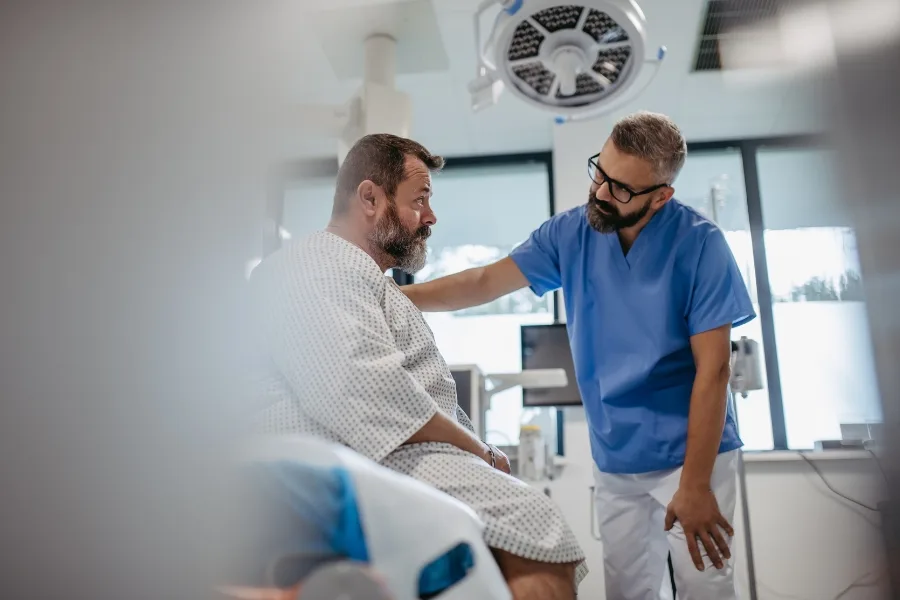
The consultation comes first: medical history, current medication, blood pressure, and a frank conversation about how much and how often. Anyone planning the journey can open https://maps.app.goo.gl/yzyj5AVnSjiD83W17 beforehand, which points to the clinic’s exact entrance, the nearest transport links and door to door directions from your own starting point. Nobody is there to shame anyone, and honest answers genuinely change what gets recommended. The procedure itself takes twenty to thirty minutes under local anaesthetic. A small incision, the pellet positioned, one or two stitches, a dressing over the top. Most people leave the same hour and return to normal activity the next day, with some tenderness around the site for a few days.
How long does the effect last?
That depends on the dose and on individual metabolism, so the precise figure should come from the clinician who examined you, not from an article. Broadly, the deterrent effect is measured in months rather than weeks, and patients are given a clear end date to plan around. Two practical points matter here. First, the reaction can be provoked by things people forget about: some mouthwashes, certain cough syrups, even food cooked with wine. Second, the protection ends when it ends, which is why the months in between should not be spent waiting passively.
Can an implant do the work on its own?
No, and any clinic worth trusting will say so directly. What it buys is time without the daily negotiation, and time is what recovery needs. The months of enforced distance are the window for therapy, support meetings, repairing relationships, and rebuilding the parts of life that drinking quietly took over. People who treat the implant as one tool inside a wider plan tend to hold onto the progress. People who treat it as the whole plan often find themselves back where they started once it wears off.
What should you ask before committing?
A short list is worth taking to the first appointment:
- what dose is recommended and how long it should stay active
- what the aftercare looks like and who to call if something feels wrong
- what the total cost covers, including follow-up visits
- what support is available once the implant stops working
Sensible questions get straight answers at a good clinic. If they do not, that tells you something useful.